Elon Musk becomes world’s first trillionaire as SpaceX soars in stock market debut
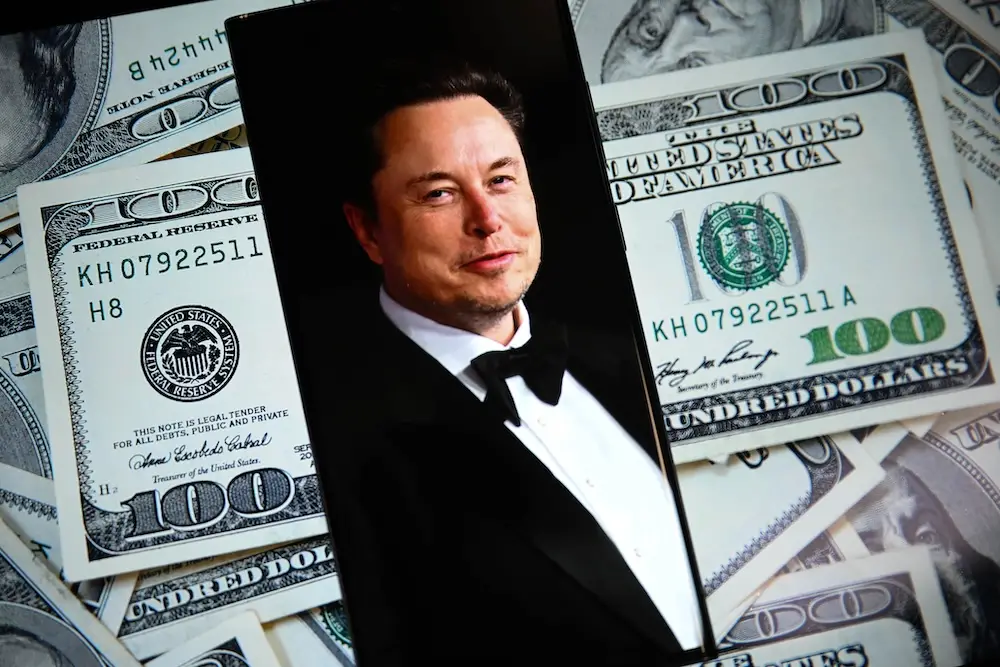
Elon Musk became the world’s first trillionaire on Friday as shares of SpaceX surged during its initial public offering (IPO), valuing the company at $2.2 trillion.
His net worth is calculated at $1.11 trillion, largely from his 42% ownership stake in SpaceX, with shares closing at approximately $161 after opening at $150.
The IPO raised $75 billion and has the potential to create over 4,400 millionaires among its staff.
Musk’s wealth, equivalent to the GDP of Poland or Switzerland, has ignited discussions about wealth inequality, drawing criticism from political figures like Senators Bernie Sanders and Elizabeth Warren, who advocate for wealth taxes.
His wealth is primarily tied to Tesla and SpaceX stock holdings, complicating his financial position as he cannot liquidate SpaceX shares for at least a year.
Currently, SpaceX is not profitable, reporting losses exceeding $9 billion in 2025 and 2026, primarily due to substantial spending on artificial intelligence and infrastructure.
The company’s key operations focus on manufacturing and launching reusable rocket components along with deploying Starlink internet satellites and engaging in AI through the acquisition of xAI.
Musk’s considerable fortune and actions in the political arena, including significant donations to campaigns and cuts to U.S. government budgets, have made him a polarizing figure in global politics.
SpaceX announced plans to utilize funding for expanding its growth strategy centered on rockets, satellites for its Starlink internet service, and AI, including ambitious initiatives like establishing data centers in orbit.
Nancy Tengler from Laffer Tengler Investments, despite labeling SpaceX’s AI segment a “cash incinerator,” is optimistic about the company’s long-term potential and has invested with a vision spanning three to ten years.
She anticipates a merger between SpaceX and Tesla within two years, potentially creating a more valuable entity.
However, SpaceX’s broader ambitions, expressed in its IPO prospectus, focus on making life multiplanetary and establishing a “lunar economy” involving regular transportation of people and cargo to the Moon and Mars.
The company acknowledges the significant uncertainty associated with these ventures, admitting that they may not achieve commercial viability.
Despite this uncertainty, investor enthusiasm remains high. Wealth Club’s Susannah Streeter noted a share price surge reflects significant interest in Elon Musk’s vision, although she cautioned that this growth might be driven by hype rather than fundamentals.
Concerns have emerged regarding the exposure of individual investors through index-linked funds, particularly about how SpaceX’s share price will fluctuate post-IPO.
Samel Kerr from Mergermarket emphasized that while immediate trading after the IPO is relevant, the more pressing issue is the long-term stability of the share price.